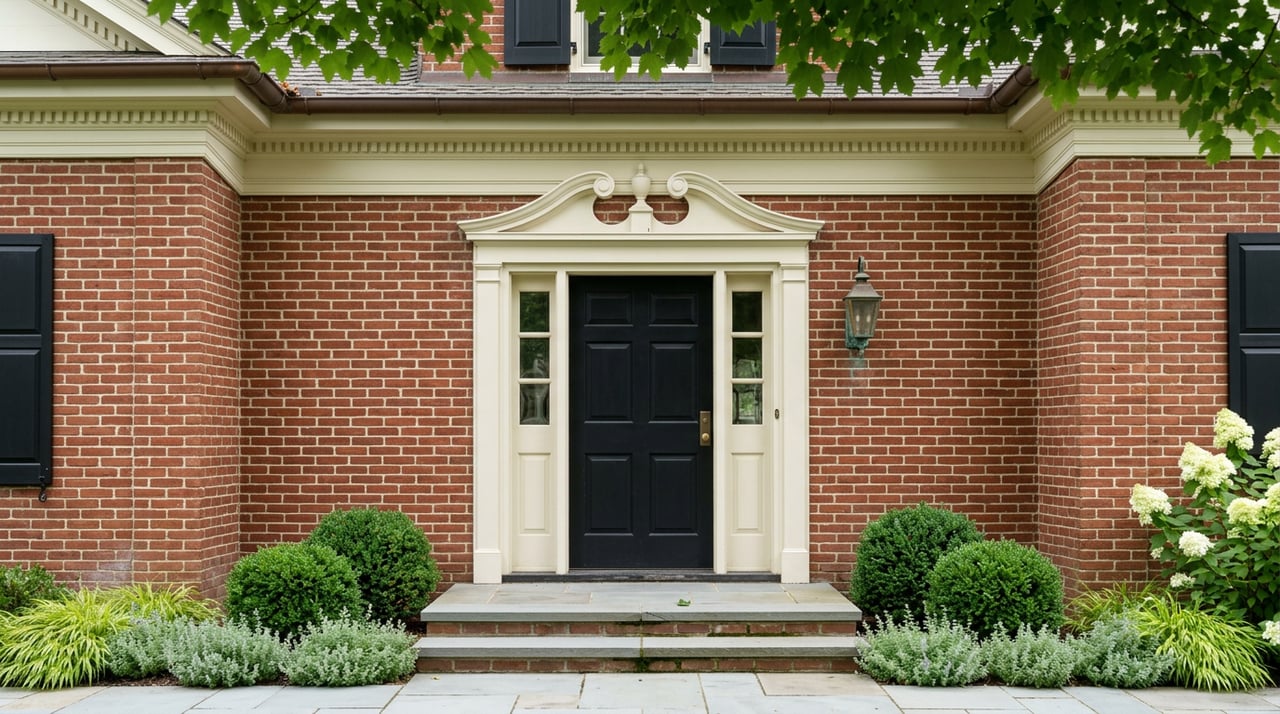
Wellesley Demolition Delay Bylaw Costs for Buyers
Wellesley
Wellesley
The application fee is fifty dollars. The form is two pages. Almost no buyer under agreement on a pre-1950 Wellesley home files it, and that is the single most expensive oversight in the town's teardown market right now.
Wellesley's Historic Preservation Demolition Review bylaw, adopted at the 2017 Annual Town Meeting and effective since August 15, 2017, gives the Historical Commission authority to impose a twelve-month hold on any demolition permit for a dwelling built on or before December 31, 1949. Nine years in, the bylaw has stopped functioning as a preservation rule and started functioning as a pricing mechanism. It has quietly redirected teardown builder demand toward Needham, changed what a pre-1950 house on a good lot is actually worth, and created a narrow procedural window that separates buyers who close on a rebuildable lot from buyers who close on a legal problem.
The bylaw applies to any structure used as a dwelling within the last three years that was built on or before the end of 1949. Everything downstream flows from that single date. An Eligibility Notice ($50) confirms whether the house crosses the line. If it does, and the owner still wants to demolish, the Historical Commission must hold a public hearing within 45 days of application to decide whether the building should be "Preferably Preserved."
The Commission's finding turns on three criteria written into the bylaw:
Meetings are typically the second Monday of the month. Seven voting members serve three-year terms, with alternates. The preservation planner researches the property and prepares a recommendation for an $800 fee, and the Preservation Determination itself runs $850, up $50 from 2024. Utilities do not need to be disconnected to file either the Eligibility Notice or the Preservation Determination. That last detail is the one that makes pre-closing sequencing possible.
The delay itself is not the point. The point is what the delay does to the math a builder uses when writing an offer on your neighbor's 1938 Colonial.
A teardown builder carries an acquired property at roughly 0.5% to 1% of value per month once you add up property taxes, insurance, financing, and opportunity cost. On a $1.5 million Wellesley acquisition, an extra six months of forced hold translates to $45,000 to $90,000 in dead carry before a single foundation is poured. That gap is not abstract. It is precisely the difference between Wellesley's twelve-month delay and Needham's six-month delay, and it is why the same builder pool that used to bid Wellesley teardowns aggressively now underwrites Needham first.
The context matters. Between 2007 and 2017, more than 600 Wellesley homes were torn down, one of the most aggressive teardown rates in Greater Boston. The 2017 vote was the town's deliberate response. It worked, but not in the way most residents describe. The bylaw did not stop demolitions. It repriced them. Builders discount pre-1950 Wellesley lots by roughly the expected carry, and they route capital to jurisdictions where the carry is shorter. Needham's Historical Commission has acknowledged publicly, as recently as 2025, that its own six-month window has not been long enough to deter builders. It has been discussing an extension for over a year without acting.
For a Wellesley seller listing a pre-1950 home to the builder pool, the twelve-month clock is now baked into the bid.
Base rates are the correction to the fear. Of the roughly 560 Wellesley houses built before 1900, only 19 had gone through the demolition delay process as of July 2024. In the initial post-bylaw wave in late 2017, of 37 Eligibility Notices filed, 11 came back not eligible because the house was built after 1949, and of the 22 eligible reviews, 12 were found not preferably preserved and 7 were preserved. In other words, most pre-1950 homes that come before the Commission are cleared for demolition.
A snapshot of recent decisions clarifies the pattern:
Property | Style / era | Commission action |
|---|---|---|
855 Washington Street | Colonial revival, 1929 | Not preferably preserved for partial demo, March 2025 |
20 Tappan Road | ~1930s | Not preferably preserved, March 2025 |
1 Kendall Road | 1930s bungalow | Not preferably preserved, July 2024 |
7 Woodcliff Road (Cliff Estates) | Colonial revival, c.1933, attributed to Wallace Temple | Preferably preserved, Jan 2026 |
45 Mayo Road (the Fells) | "Porter Colonial," c.1947 | Preferably preserved, Jan 2026 |
45 Windsor Road | Pre-1950 | Waiver granted with conditions, Jan 2026 |
10 Alba Road | Pre-1950 | Waiver granted, Option C plans, Jan 2026 |
The Commission's decisions cluster around identifiable rationales. A named architect or builder association, a documented development history like the Cliff Estates or the Fells, an intact facade with signature detailing like the Porter Colonials, or a house sited inside a coherent architectural group tend to move the Commission toward preservation. A pre-1950 date on its own does not.
Even a Preferably Preserved determination is not the end of the road. Under the bylaw, an owner can seek a waiver to shorten or eliminate the 12-month delay by demonstrating a bona fide, unsuccessful effort to find a preservation-minded purchaser, or by agreeing to demolition permit conditions the Commission approves.
In practice this has evolved into a design-negotiation track. At 45 Windsor Road in January 2026, the Commission approved a waiver on a 5-0 vote, conditional on dark-sky compliant lighting, the town engineer signing off on stormwater and groundwater impacts, and one commissioner retaining final approval over the pediment, doorway, and roofline. The Windsor Road application, which had come back three times with a flipped driveway and a landscape plan preserving 95% of existing trees, is the current template for how a builder or owner extracts a workable timeline from the process.
The build-around is the other emerging option. A widely covered project by architect David Stern and interior designer Diane McCafferty, published in Boston magazine's Boston Home summer 2026 edition, kept the 1930s center-hall brick section of a preferably preserved Wellesley house and bookended it with limestone-clad contemporary wings, with landscape by Sudbury Design Group and construction by The Lagassé Group. The design was a direct response to the twelve-month delay. It let the owners start immediately, avoided the delay entirely, and produced the kind of house the delay was never intended to prevent.
For a buyer whose plan for a pre-1950 Wellesley home involves demolition, the friction is not the outcome. It is the timing. The bylaw resolves within a defined window if you start early, and it resolves after your closing catastrophe if you do not.
Two moves protect the price. First, pull an Eligibility Notice before listing. If the house comes back not eligible, or eligible but of a style and provenance the Commission has recently cleared, that becomes marketing you can put in front of every builder in Greater Boston. Second, if the house sits inside a documented context like the Cliff Estates, the Fells, the Cottage Street Historic District, or within 150 feet of one of the town's five single-building historic districts, price the listing with the twelve-month carry factored in, and market the lot to end-user buyers and build-around architects rather than volume builders.
Does the bylaw apply if I only want to renovate? Only if the work qualifies as demolition of more than 50% of the dwelling under the bylaw. Interior work inside a local historic district is generally not reviewed by the Historic District Commission either, though exterior changes visible from a public way are.
How long does the whole process take from filing to answer? The Historical Commission must schedule the hearing within 45 days of a Preservation Determination application, and it typically meets the second Monday of the month. A clean Eligibility Notice can come back in weeks. A full determination with a waiver negotiation, as at 45 Windsor Road, can run several months across multiple hearings.
Does a Not Preferably Preserved decision last forever? No. Prior determinations have expiration windows, and properties have returned to the Commission after those windows closed. 855 Washington Street, first heard in 2021, came back in March 2025 after the grace period expired in November 2024.
Can I appeal a Preferably Preserved decision? The bylaw provides a waiver path, not an appeal in the conventional sense. The waiver is negotiated with the Commission, usually around design changes, purchaser-search documentation, or partial preservation.
Wellesley's demolition delay bylaw is not an obstacle to work around. It is a market signal, and the buyers and sellers who read it correctly have a measurable edge on those who do not. If you are evaluating a pre-1950 Wellesley home, whether as a buyer with a rebuild in mind or as a seller weighing which builder to entertain, the Batya & Alex Team can help you sequence the filings, price the carry, and structure the offer around a process the rest of the market treats as a surprise. Start Your Home Search with us when you are ready.
Newton
Brookline
Selling a Home
Brookline
Newton
Newton
Our team will elevate your real estate experience, ensuring sellers shine and buyers win in Greater Boston's competitive market. Our dedication goes beyond deals—we're about making dreams a reality, building lasting bonds, and turning complex market challenges into rewarding outcomes for every client.