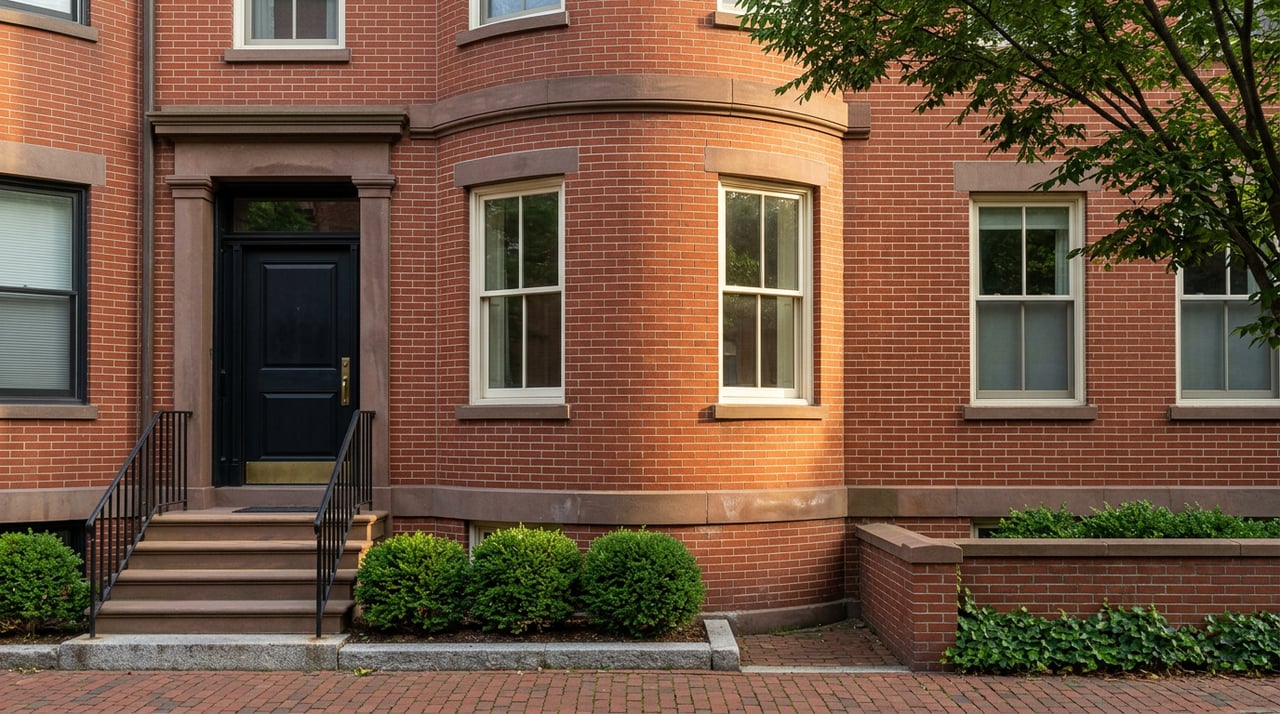
Back Bay Condo Submarkets: Why One Median Hides Three Markets
Boston
Boston
A buyer with a $1.7 million pre-approval letter searches "Back Bay condos," sees a median sale price hovering near $1.9 million from earlier in 2026, and quietly assumes they're shopping toward the lower half of the market. That assumption is the first mistake most people make in Back Bay, and it has nothing to do with their budget. It has to do with what "Back Bay" means when a portal reports on it as one neighborhood.
Back Bay is not one condo market. Walk from the west end of Commonwealth Avenue toward the blocks around the Prudential Center and you cross through pricing worlds that behave differently from each other, shaped by different building stock, different fee structures, and different assumptions about where you park. The neighborhood-wide median blends all of that into a single number that describes no specific building a buyer will ever actually tour.
An April 2026 snapshot of active Back Bay listings broke the neighborhood into three familiar geographic pockets, and the spread between them says more about the market than the citywide median does.
Submarket | Active Listings | Median List Price | Avg. Days on Market |
|---|---|---|---|
Back Bay East | 39 | $2.27M | 43 |
Prudential / St. Botolph | 27 | $1.73M | 40 |
Back Bay West | 42 | $1.05M | 51 |
That's more than a two-to-one spread inside a single neighborhood name. A buyer comparing a $1.7 million pre-approval to the blended Back Bay median from earlier in 2026, when the neighborhood-wide per-square-foot figure ran near $1,627, might reasonably conclude they're underfunded for the area. That same buyer, shopping specifically in Back Bay West or parts of the Prudential-St. Botolph pocket, is closer to the middle of active inventory than the edge of it.
The split isn't really about square footage. It's about what's actually built on each block. The east end and the stretch along Commonwealth Avenue carry more of the neighborhood's landmark brownstones and its full-service towers, buildings like One Dalton with its Four Seasons-branded services, and Millennium Tower, whose scale and amenity package sit in a different pricing tier than a converted rowhouse two blocks over. Move west and the inventory leans toward quieter conversions and smaller floor plates, the kind of building that doesn't come with a concierge desk or an attached garage.
Even once a buyer finds the right submarket, the sale price is only the first number. Boston condo specialists generally plan for fees in a working range of $0.50 to $1.25 per square foot per month across the city, which puts a 900-square-foot unit in a mid-tier building around $450 to $700 a month. Back Bay's full-service towers run above that citywide range, with planning estimates commonly cited between $1.00 and $3.50 per square foot per month, and full-service buildings anywhere in the city can clear $1,200 a month for a similarly sized unit once staffing, elevators, and reserve contributions are built into the budget. Two listed condos at comparable prices can carry monthly fees as far apart as $320 and $657, depending on staffing level and how much of the building's systems that fee is funding.
That gap changes what a buyer can actually spend on the mortgage itself. If a lender caps total monthly housing costs at $3,500, a $700 difference in condo fees between two buildings doesn't just cost $700 a month. It reduces the amount available for principal and interest by that same $700, which works out to a real difference in the purchase price a buyer can qualify for on otherwise similar listings.
Parking compounds the gap. Back Bay brownstones frequently don't come with dedicated parking at all, while full-service towers often bundle valet or garage access into ownership, sometimes inside the fee and sometimes as a separate line item. Street parking isn't a stable backup either. Recent curb-management changes in the neighborhood removed 125 metered spaces and added 123 resident-permit spots, a reminder that on-street availability shifts with city policy, not with a buyer's plans.
None of this means Back Bay East is objectively better than Back Bay West, or that a lower fee is automatically the smarter buy. A lower fee on an older, self-managed building can mean a smaller reserve fund and a larger special assessment down the line if the roof or the masonry needs work. A higher fee on a full-service tower can mean predictable monthly costs but less flexibility. Back Bay's historic district review standards apply to exterior work across the neighborhood regardless of submarket, so a buyer planning a renovation should ask about a building's history with exterior approvals before assuming the work will move quickly.
What the submarket split actually buys a shopper is a better question to bring to a showing. Instead of asking what Back Bay costs, the useful version is which Back Bay a listing sits in, and what its fee structure assumes you're paying for. A pre-approval that looks tight against the blended median might be exactly right for Back Bay West or the Prudential corridor. A buyer set on Commonwealth Avenue or the east end should expect to compete closer to that $2.27 million figure, and should budget for the higher end of the fee range that comes with the buildings clustered there.
Does a lower price per square foot in Back Bay West mean a better deal? Not automatically. It usually reflects an older building with fewer amenities and, often, a smaller reserve fund. Ask for the association's reserve study and its special assessment history before comparing two listings on price alone.
Can I renovate a Back Bay condo the way I want? Exterior work in Back Bay is subject to historic district review standards that apply across the neighborhood, regardless of submarket or building type. Interior renovations typically move faster, but any change visible from the street should be checked against the association's process and the city's review before you write an offer.
Is parking included when I buy a Back Bay condo? Not by default. Many brownstones don't come with dedicated parking, while full-service towers more often bundle valet or garage access, sometimes as part of the fee and sometimes as a separate cost. Confirm whether deeded parking is actually part of a listing before assuming it is.
Back Bay rewards a buyer who shops by block and building type, not by neighborhood-wide average. If you're comparing your pre-approval number to a blended median and trying to figure out which pocket actually fits, the Batya & Alex Team can walk you through the submarket, the building type, and the fee structure that match your budget. Start Your Home Search today.
This article is general information, not legal, tax or financial advice. Consult a qualified professional about your situation.
Newton
Brookline
Selling a Home
Brookline
Newton
Newton
Brookline
Our team will elevate your real estate experience, ensuring sellers shine and buyers win in Greater Boston's competitive market. Our dedication goes beyond deals—we're about making dreams a reality, building lasting bonds, and turning complex market challenges into rewarding outcomes for every client.