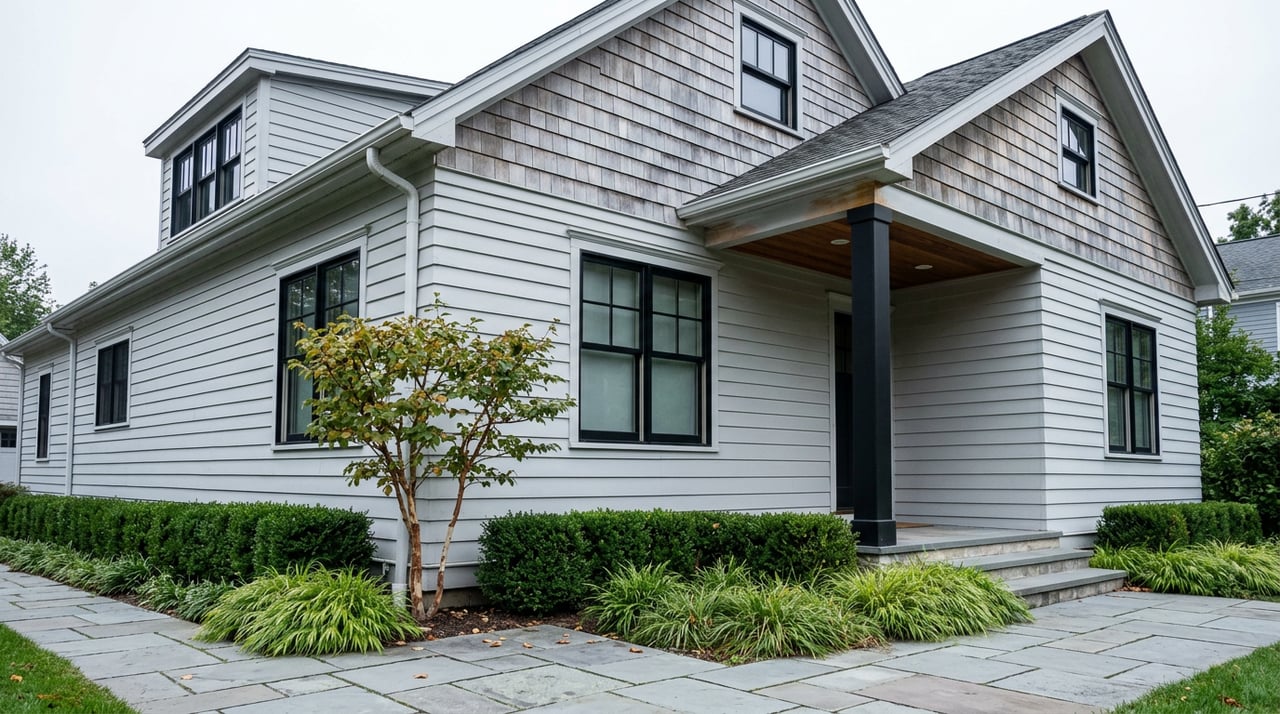
The Newton Smoke Detector Certificate: Why Your House's Renovation History Matters More Than Its Age
Sellers who've done their homework tend to walk into this one confident. They know Newton requires a smoke and carbon monoxide inspection before closing. They know their 1928 Dutch Colonial in Newton Corner falls under the older rules, the ones that allow battery-powered detectors instead of hardwired systems. They schedule the inspection, expect a quick pass, and move on to the next line on the closing checklist.
Then the inspector fails the house. Not because the detectors are missing or dead, but because the kitchen renovation from six years ago, the one that added a bedroom over the garage, quietly moved the house into a newer compliance tier. The 1928 build date on the deed stopped mattering the day that permit was filed.
This is the part of Newton's certificate of compliance process that catches sellers who did everything right by the wrong calendar. The house's age tells you where to start. It does not tell you where you actually land.
Massachusetts law ties smoke detector requirements to construction date, with different rules for homes built before 1975, between 1975 and 1997, between 1997 and 2008, and after 2008. Most sellers stop there, match their year built to a tier, and assume they're done.
Newton's own ordinance adds a second gate. Under Newton City Ordinance Chapter 10, Section 10-11, the date that governs your detector requirements isn't necessarily the date the home was built. It's the date the home was built or last substantially renovated, whichever is more recent. The city defines a substantial renovation as any project that touches one third of the home's assessed size or value, or any renovation that adds, alters, or modifies a bedroom.
That second clause is the one that surprises people. It doesn't take a full gut renovation to trigger it. A primary suite expansion, a finished attic converted into a fourth bedroom, a garage-to-in-law addition: any of these resets the clock, even on a home whose exterior still reads as a classic prewar cape in Waban or Auburndale. The house looks pre-1975. The permit history says otherwise.
The practical difference between tiers isn't cosmetic. Newton's inspection page lists baseline requirements that apply across the board: every smoke detector must be photoelectric, no more than 10 years old, and mounted on the ceiling, and any unit manufactured after 2016 needs a sealed 10-year battery. Beyond that floor, the era your home falls into determines how much more you need.
| Construction or renovation date | General requirement pattern |
|---|---|
| Before 1975 | Battery-powered smoke detectors typically acceptable, photoelectric type required |
| 1975 to 1997 | Hardwired smoke detectors |
| 1997 to 2008 | Hardwired smoke detectors, including in bedrooms |
| After 2008 | Hardwired smoke and carbon monoxide detectors, interconnected |
A homeowner who assumes their house sits in the first row because of its original construction date, but whose last major project added a bedroom, needs to be planning and budgeting for the last row instead. That's the gap between a $50 fix and an electrician's invoice, and it's the kind of thing you want to know before you list, not during the week before closing.
Even sellers who land in the right tier can still get caught by Newton's scheduling mechanics, because the city isn't running this inspection on demand. Newton Fire Prevention conducts smoke and CO inspections only on Mondays, Tuesdays, Thursdays, and Fridays, between 9am and noon. No Wednesdays. No afternoons. The department's own guidance recommends booking the appointment about a month before your closing date, which is a wider buffer than a lot of sellers build into their timeline when they're focused on staging and showings instead.
Miss that slot and the cost compounds. If you're late or you miss your appointment, Newton's fire prevention page states plainly that you're responsible for rescheduling for another day, and you'll pay the fee for both the missed appointment and the new one. There's a second detail worth flagging if your home has a fire alarm panel: someone capable of operating that panel needs to be on-site during the inspection to put the system into test mode and clear the alarms afterward. If that's not you, it's whoever installed or monitors the system, and that person needs to be lined up in advance too.
None of this is dramatic on its own. Stacked together, a substantial-renovation surprise plus a four-day booking window plus a panel operator requirement is exactly how a certificate that should take twenty minutes turns into a scheduling problem two weeks before closing.
If you've searched around for how long a Massachusetts smoke and CO certificate stays valid, you may have come across a figure of six months. That number shows up on a few real estate marketing sites, but it doesn't match the state's own certificate form or the guidance published by individual fire departments. The Commonwealth's official Application for Certificate of Compliance for Smoke Detectors and Carbon Monoxide Alarms states the certificate expires 60 days after the date of issue, and that 60-day window is echoed by other Massachusetts fire departments, including Quincy and North Andover.
The practical implication is timing. If you get your certificate early to be safe, and your closing then slips due to financing delays or a title issue, a 60-day window is a lot easier to blow past than six months. Sellers who schedule the inspection right after listing, expecting to bank the certificate for the duration of the sale, may need a re-inspection if the process runs long. It's worth building that into your calendar rather than assuming the certificate is good until closing no matter when that turns out to be.
Before you book anything, pull your building permit history. The City of Newton's Inspectional Services records, along with your own renovation paperwork, will tell you whether any project since your home was built crossed the one-third threshold or touched a bedroom. If you're not sure, Newton's Fire Prevention office can help you work through it, and the city's published smoke detector guide walks through the placement and equipment requirements tier by tier.
If your renovation history is complicated, or you're not confident reading your own permit file, it's worth bringing in a local fire and life safety specialist who handles detector assessment, installation, and fire department coordination as a single engagement rather than piecing it together yourself in the weeks before closing.
Does this apply to condos? Multi-family and condo units fall under related but distinct sections of Massachusetts General Law, with additional requirements for common areas like stairwells and hallways. If you're selling a Newton condo, confirm which ordinance section applies to your building type before scheduling.
What if my certificate expires before closing actually happens? Because the certificate is valid for 60 days from issue, a delayed closing can push you past that window. Newton's own fire prevention page points sellers to the state's guidance on home sales and deferrals for exactly this situation, so it's worth raising with Newton Fire Prevention directly rather than assuming the original certificate will carry through.
Can I install the detectors myself? Massachusetts law allows self-installation, but any work on a hardwired fire alarm system requires a fire alarm permit from Newton's Fire Department, separate from any electrical permit. Skipping that permit step can delay your inspection even if the detectors themselves are correct.
What if I genuinely don't know if my last renovation counts as "substantial"? Newton's ordinance ties the threshold to one third of assessed size or value, which is a number your assessor's records and your original permit application can help clarify. When in doubt, ask Newton Fire Prevention directly before you schedule, not after a failed inspection.
Selling a Newton home involves more moving parts than the listing photos ever show, and the smoke detector certificate is one of the few steps where a city ordinance, not just state law, decides how much work you're in for. If you're planning a sale and want a clear read on where your specific property stands before it becomes a closing-week surprise, the Batya & Alex Team can walk through your renovation history with you and help you sequence the inspection so it never holds up your closing. Start Your Home Search today and let's talk through what your Newton home actually needs.




Our team will elevate your real estate experience, ensuring sellers shine and buyers win in Greater Boston's competitive market. Our dedication goes beyond deals—we're about making dreams a reality, building lasting bonds, and turning complex market challenges into rewarding outcomes for every client.