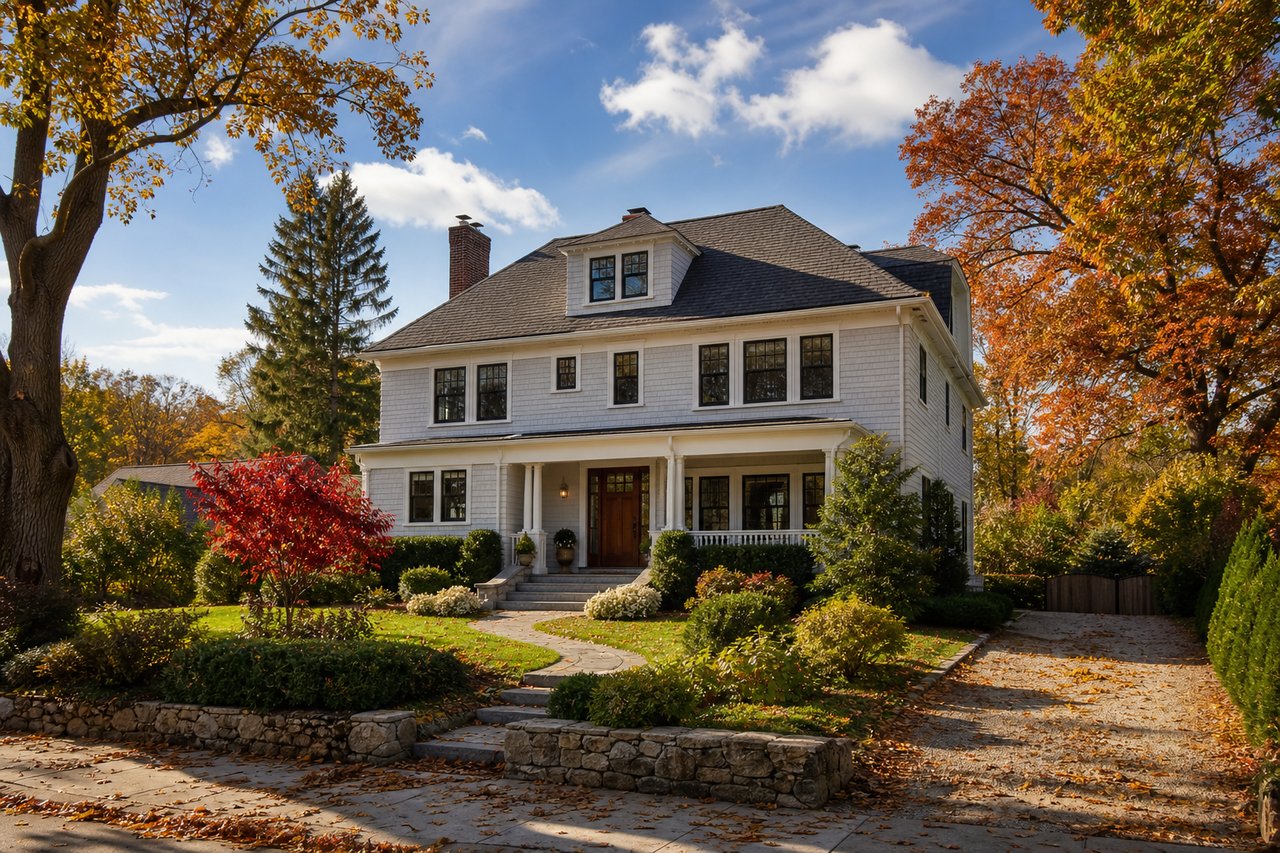
What does a near-asking-price market mean for Newton sellers in 2026?
Newton homes are currently selling at roughly 100% of list price, meaning buyers are meeting sellers at the ask rather than bidding well above it. That environment doesn't punish a well-priced, well-prepared home, but it does punish one that starts too high. Sellers who price accurately from the first week, present the property well, and evaluate offers on more than headline number are the ones closing on their terms.
Key Takeaways
- Recent local market data shows Newton-area median sale prices ranging from $1,165,000 in Chestnut Hill to $1,850,000 in Newton Corner, with median days on market between 42 and 71 days depending on the village.
- A sale-to-list ratio near 100% means an inflated opening price is more likely to extend your time on market than to leave room for negotiation, accurate pricing from day one is the stronger play.
- Village Center Overlay District development is advancing in Newton, but no verified completion or listing date exists for additional units; sellers should treat it as a future-supply consideration, not an imminent deadline.
- In a near-asking environment, offer quality, financing certainty, inspection terms, deposit structure, and closing flexibility, matters as much as the number at the top of the page.
- Preparation focused on condition, deferred maintenance, and presentation reduces buyer objections and supports the list price; the goal is removing reasons to discount, not chasing a renovation premium.
How should you price a Newton home when the market is near asking?
The short answer: price it where the comparables actually land, not where you wish they would. A near-100% sale-to-list ratio is a signal that buyers in Newton are doing their homework. They know what similar homes sold for, and they're not stretching past it.
That doesn't mean you can't achieve a strong result. It means the path to a strong result runs through an accurate opening number, not an aspirational one. When a home is priced at market from the start, it generates the most buyer attention in the first two weeks, the window when serious, pre-approved buyers are watching most closely. Price it 8% above market, and many of those buyers skip it entirely.
Here's what the current data shows across Newton's villages, based on recent local market data from trailing 90-day closed sales as of September 2026:
Area | Median Sale Price | Median Days on Market |
|---|---|---|
Waban | $1,815,000 | 42 |
Newton Centre | $1,800,000 | 57 |
Newtonville | $1,576,000 | 71 |
Newton Highlands | $1,400,000 | 68 |
Newton Corner | $1,850,000 | 71 |
West Newton | $1,280,000 | 56 |
Chestnut Hill | $1,165,000 | 64 |
These are area-level medians, your home's value depends on its condition, street, build year, and how it compares to the specific homes that closed near it. But the pattern is consistent: buyers across Newton's villages are transacting close to list. That's the environment you're pricing into.
For sellers in the upper price tier, we walk through this in more depth in our post on Pricing Luxury Homes in Newton With Precision. The core discipline is the same regardless of price point: price to the data, not the hope.
According to National Association of REALTORS® research, homes that sit on the market beyond the first 30 days typically require price reductions that cost sellers more than a correctly priced launch would have. That pattern holds in Newton. The MLS data we review with every seller confirms it locally: price reductions signal weakness, and weakness invites lower offers and tougher inspection negotiations.
Your specific number depends on your home's condition, location within the village, and what has actually closed in the last 60 to 90 days, not 12 months ago. That's where a current comparative market analysis matters. We run one for every seller before we set a list price, and we'd be glad to run one for you.
How much preparation actually moves the needle before listing?
In a near-asking market, preparation isn't about generating a renovation premium. It's about removing the reasons a buyer would discount your home or walk away at inspection.
The goal is to get a buyer to full ask with confidence, not to trigger a renegotiation after the inspection because deferred maintenance surfaced. That's a different framing than "spend $X to get $Y back", and it's the honest one. We can't promise a specific return on any improvement, and we won't. What we can tell you is that a home that shows well and has no obvious deferred maintenance generates cleaner offers.
Where preparation tends to matter most
- Deferred maintenance: Anything a buyer's inspector is likely to flag, roof age, HVAC service records, water heater condition, foundation drainage, is worth addressing or disclosing proactively. Surprises at inspection cost more in renegotiation than they cost to fix.
- First-impression presentation: Exterior condition, entryway, and the first rooms a buyer sees set the emotional tone. Buyers decide quickly. A home that reads as well-maintained from the curb supports its price from the first showing.
- Photography and staging: Most buyers filter online before they ever schedule a showing. Professional photography and thoughtful staging are not optional at Newton price points, they determine whether your home gets on the showing list at all.
- Clutter and personalization: Buyers need to see themselves in the space. Reducing visual noise and personal items is one of the highest-return preparation steps that costs almost nothing.
We walk through the full preparation checklist in our guide to getting your Newton home ready to sell. The right level of preparation depends on your specific property and its likely buyer pool, that's a conversation worth having before you spend anything.
Should you accept the highest offer, and does VCOD supply change the calculus?
Evaluating offers in a near-asking environment
When offers cluster near list price, as they do in the current Newton market, the headline number stops being the primary differentiator. What separates a strong offer from a risky one is everything underneath it.
The factors we walk every seller through when comparing offers include:
- Financing certainty: A fully underwritten pre-approval or cash offer carries meaningfully less appraisal and financing-fall-through risk than a pre-qualification letter. At Newton price points, an appraisal gap can be a real issue.
- Inspection terms: How an offer handles the inspection contingency, waived, limited, or standard, affects both your timeline certainty and your exposure to post-inspection renegotiation.
- Deposit structure: A larger earnest money deposit signals commitment. It also provides more protection if a buyer attempts to exit without cause.
- Closing date and flexibility: Does the buyer's timeline match yours? A higher offer that requires a closing date you can't meet may be worth less than a slightly lower offer that fits your move.
- Contingencies overall: Fewer contingencies mean fewer exit ramps for the buyer, which means more certainty for you.
The Consumer Financial Protection Bureau notes that financing contingencies are among the most common reasons residential transactions fall through. In Newton's price range, we take financing quality seriously on every offer we evaluate with a seller.
The right offer for your situation depends on factors specific to your home, your timeline, and your next move. We help sellers build a comparison framework before offers come in, so the decision isn't made under pressure on offer night.
What does Village Center Overlay development mean for your timing?
Newton's Village Center Overlay District zoning is enabling new residential development across several of the city's villages. A proposed redevelopment of the former Santander Bank site, for example, involves two adjacent buildings permitted by right under the updated VCOD framework. That project, and others like it, represents real future supply.
But "future" is the operative word. No verified completion date, occupancy date, or listing schedule exists for VCOD pipeline homes. The City document describes a proposed redevelopment, not a delivered product. The responsible framing for a seller is this: VCOD construction is a future-supply consideration, not an imminent wave of competition hitting the market next quarter.
That said, the strategic question is worth asking now. If a specific VCOD project in your village advances from proposed to permitted to under construction, the competitive landscape for your home will eventually look different, particularly for buyers weighing a new-construction condo against an existing single-family home. We cover the broader pricing implications of this zoning shift in our post on How Newton Village Center Zoning Is Shaping Home Prices.
The practical framework for a seller considering timing: compare three things, your current comparable inventory, your property's readiness, and whether any specific VCOD project near you has actually reached active construction or marketing. If inventory is manageable, your home is ready, and no competing project is imminent in your village, waiting for spring doesn't obviously improve your position. If a project is advancing and your home competes with the product type it will deliver, that changes the calculus.
Every situation is different. The only way to assess your specific position is to look at what's actually in the pipeline near your address, and that's a conversation we can have directly.
We also know that many Newton sellers are coordinating a sale with a next purchase. If that's your situation, the timing question gets more layered, our post on coordinating your Newton home sale and next purchase walks through how to sequence that move.
Curious what your neighbors have experienced with us? Read our reviews on Google, Zillow, and Realtor.com.
Frequently Asked Questions
Is now a good time to list my Newton home, or should I wait until spring?
Waiting for spring doesn't automatically improve your position in a market where homes are already selling near asking price. The fall market in Newton typically brings serious, motivated buyers with fewer competing listings than spring, which can work in a seller's favor. The more relevant questions are whether your home is ready, what comparable inventory looks like in your village right now, and whether any specific supply event (such as a nearby VCOD project reaching completion) is likely before or after your target list date. We can walk through all three with you.
Are Newton homes still selling above asking price in 2026?
The current sale-to-list ratio in Newton is running near 100%, meaning most homes are selling at or very close to list price rather than significantly above it. Some well-prepared, accurately priced homes in high-demand villages do attract multiple offers and close above ask, but the market no longer supports assuming that outcome for every property. Accurate pricing and strong presentation are what generate competitive interest in this environment.
How should I price my Newton home when comparable properties are selling near asking?
Price it where the comparables actually closed, not where you hope they would have. In a near-100% sale-to-list market, an inflated opening price tends to extend days on market rather than create negotiating room, and a price reduction signals weakness that invites lower offers. A current comparative market analysis focused on the last 60 to 90 days of closed sales in your specific village is the right foundation. That's what we build for every seller before we set a number.
Should I accept the highest offer, or is a cleaner offer better?
When offers cluster near list price, the headline number is rarely the only factor worth weighing. Financing certainty, inspection terms, deposit size, contingency structure, and closing-date flexibility all affect how likely the transaction is to close on your terms. A slightly lower offer with strong financing, a meaningful deposit, and limited contingencies often represents less risk than the highest number on a shakier foundation. We help sellers build a comparison framework before offers arrive so the decision isn't made under pressure.
Will new Village Center Overlay housing affect Newton home values or buyer demand?
VCOD development represents real future supply in several Newton villages, but no pipeline project has a verified completion date or listing schedule as of now. The impact on existing home values will depend on the product type delivered, the village it's in, and the buyer pool it attracts, new-construction condos and existing single-family homes don't always compete directly. For sellers, the practical question is whether any specific project near your address has advanced to active construction or marketing, which is worth assessing before you decide when to list.
How long are Newton single-family homes taking to sell right now?
Based on recent local market data from trailing 90-day closed sales, median days on market across Newton's villages ranges from 42 days in Waban to 71 days in Newtonville and Newton Corner. That range reflects meaningful differences in price point, inventory, and buyer competition by village, a citywide average won't tell you what to expect for your specific home. Condition, pricing accuracy, and launch timing all affect where your sale falls within that range.
Newton's near-asking market rewards sellers who go in with accurate pricing, a well-prepared home, and a clear framework for evaluating what they get back. The sellers who struggle are the ones who price optimistically, skip preparation, and then make decisions under pressure when the offers don't look the way they expected.
We'd be glad to run a current market analysis for your home and talk through the timing and preparation questions specific to your situation. Schedule a consultation with us, or if you'd like a starting point on value, request a free home evaluation and we'll be in touch.
This article is general information only and does not constitute legal, tax, or financial advice. Readers should confirm transaction details, costs, and terms with their closing agent, tax advisor, or lender. Equal Housing Opportunity. Batya Natan License #9516514; Alex Kumas License #9531556. Licensed by the Massachusetts Board of Registration of Real Estate Brokers and Salespersons.