Brookline vs Newton: A Family-Focused Housing Comparison
Trying to choose between Brookline and Newton for your next home? If you want a place that supports daily family life, the answer often comes down to how you want to live, not just what you want to buy. From school structure and commute patterns to parks and housing types, each community offers a distinct experience. Let’s break down the differences so you can compare them with more confidence.
Brookline and Newton are both close-in, high-demand communities west of Boston, but they feel different in day-to-day life. Brookline is generally more compact, more transit-focused, and more multifamily-heavy. Newton is larger, more spread out, and has a stronger detached-home profile.
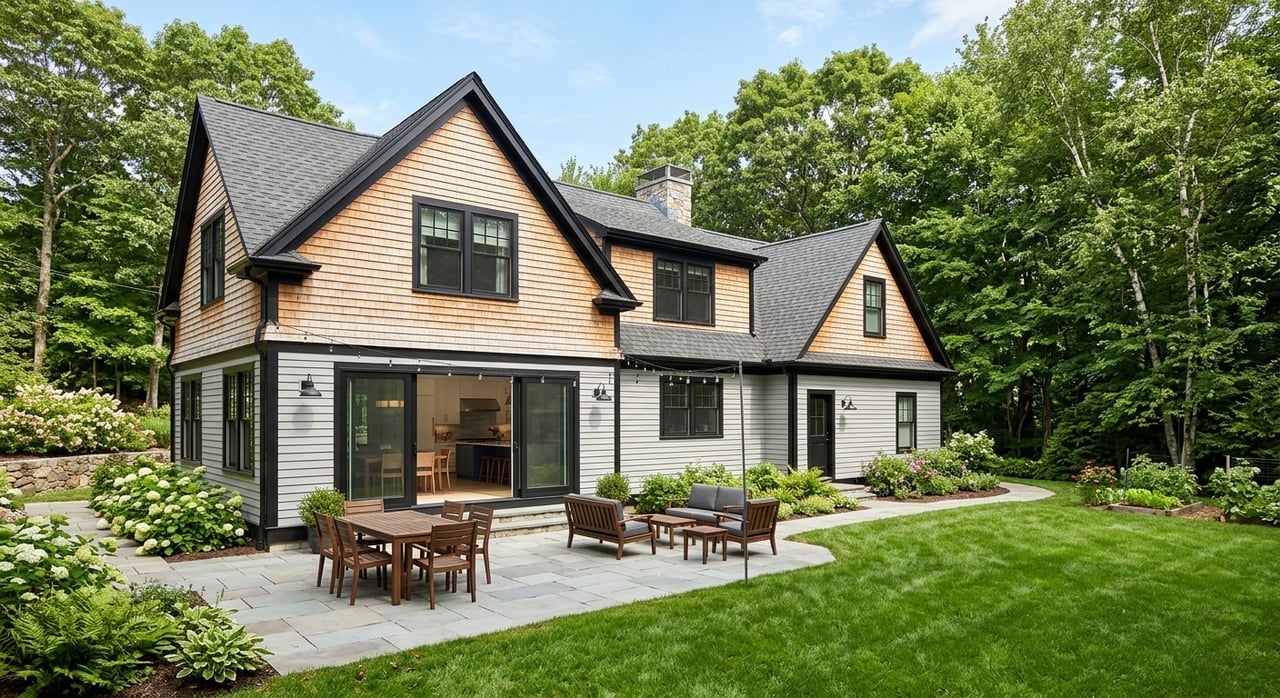
If you are weighing space, commute convenience, and housing style at the same time, that difference matters. In simple terms, Brookline often appeals to buyers who want proximity and walkability, while Newton often appeals to buyers who want more room and a broader range of single-family options.
For many buyers, school structure shapes more than academics. It affects routines, transitions, and how often your household may need to adjust to a new campus or schedule.
Brookline’s district is organized around eight PK-8 schools plus Brookline High School. The town’s school materials also use the labels PK-Grade 8 Programs and High School Programs, which reinforces that model. Brookline’s district structure can mean fewer school transitions before high school.
For some families, that continuity is a major plus. It can create a more predictable path from early grades through middle school years within the same general school structure.
Newton Public Schools is a larger K-12 system with 15 elementary schools, 4 middle schools, 2 comprehensive high schools, 2 alternative high school programs, and an integrated preschool. The district reported 11,494 students in October 2024, with more than 70 languages spoken in the student and parent population, along with 417 METCO students.
That structure gives families more elementary-school options, but it also creates a more segmented K-5, 6-8, and 9-12 pathway. If your household values a wider district footprint and more school-site variety, Newton may feel like a better fit.
If your weekends involve playgrounds, walks, sports, or simply having green space nearby, Brookline and Newton both offer a lot. The difference is scale and layout.
Brookline’s community-preservation plan says the town has about 1,172 acres of open space, or 26.9% of its 4,355-acre land area. About 49% of that open space has some legal protection, according to the same plan. Notable open spaces include Larz Anderson Park, Corey Hill Park, Skyline Park, and Fisher Hill Reservoir Park, and Larz Anderson Park is identified as Brookline’s largest park at more than 61 acres.
In practice, Brookline often feels park-oriented in a compact way. You get recognizable destination parks in a town that is relatively tight and easy to navigate.
Newton says it maintains about 1,200 acres of parkland, playgrounds, school grounds, and burial grounds. Its Open Space and Recreation Plan says Newton has roughly 2,500 acres of open space across inventoried categories, and roughly 65 playgrounds. The city also notes that Webster Conservation Area is its largest protected open space at roughly 230 acres.
That gives Newton a different feel. Rather than a smaller number of signature spaces, you often find open space and playgrounds distributed across a wider area.
Your housing decision may be shaped as much by the morning routine as by the home itself. Commute style is one of the clearest distinctions between Brookline and Newton.
Brookline is served by the MBTA Green Line C and D branches. The town says the C branch has 12 stops in Brookline, while the D branch has 5 stations for Brookline residents. Brookline also notes access to the B and E branches in certain areas, along with MBTA bus routes 51, 60, 65, and 66 on its Green Line information page.
That transit density can be especially attractive if you want easier access to Boston, Longwood, or Coolidge Corner. For buyers who prioritize public transportation and shorter, more direct city connections, Brookline often stands out.
Newton’s transportation materials say the Green Line D branch runs through the city with seven stations, including Riverside, Woodland, Waban, Eliot, Newton Highlands, Newton Centre, and Chestnut Hill. Newton also has commuter rail service at Auburndale, West Newton, and Newtonville on the Framingham/Worcester line, plus multiple bus routes, according to the city’s economic development and transportation overview.
Newton is still transit-rich, but daily life can be more mixed between transit and car use because the city covers a larger area. If you want multiple village centers and wider geographic choice, that tradeoff may be worth it.
A town’s housing mix tells you a lot about your likely search experience. It affects price points, lot sizes, condo inventory, and how quickly you may need to act when the right property appears.
Brookline’s 2024 Renters Project says there are about 28,000 residential units in 17,900 buildings, including 6,797 single-family properties, 1,487 two-family buildings, 5,896 three-family buildings, 201 four-to-eight-unit buildings, and 156 nine-plus-unit buildings. The report also says roughly 43% of the town’s building stock contains renters. A prior comprehensive plan found that 48% of units were in buildings with nine or more units and only 17% were in single-family homes, according to the Brookline Renters Project.
That usually means more condo and small-building choices for buyers. If you are open to attached housing in exchange for location and convenience, Brookline may offer more options that align with that goal.
Newton’s housing snapshot shows 33,054 total housing units in 2020, including 17,184 single-family units, 5,235 condominiums, 5,386 two-family units, 819 three-family units, 4,328 apartment units, and 102 accessory apartments. The city frames its stock as predominantly single-family, even as it works to diversify housing choices.
For many buyers, that translates into a broader detached-home market. You can still find condos and multifamily options, but Newton tends to offer more of the classic single-family search experience.
Both Brookline and Newton are premium markets. Still, their pricing patterns are not identical.
In Brookline’s 2024 Housing Production Plan, a 2020 comparison table shows median sale prices of $2,135,000 for a single-family home and $922,000 for a condo in Brookline. The same table shows Newton at $1,300,000 for a single-family home and $800,750 for a condo. You can review that context in the town’s Housing Production Plan.
Those figures are not perfectly matched year-to-year market comps, but they are useful snapshots. Broadly, Brookline tends to command a higher price for detached homes.
Brookline’s About page says current median assessed values are over $1.5 million for a single-family home and $662,650 for a condominium. Newton’s FY2026 classification hearing reports median assessed values of $1,503,500 for single-family homes and $813,500 for condos, based on separate municipal assessment materials.
The practical takeaway is simple: both towns require a clear budget strategy. In many cases, buyers are deciding between commute convenience, interior space, lot size, and housing type rather than looking for a dramatic price gap.
There is no one-size-fits-all answer here. The better choice depends on what matters most in your daily routine and long-term housing goals.
When buyers compare these towns, the most helpful approach is to focus on tradeoffs instead of chasing a perfect answer. A larger home may come with a different commute pattern. A more walkable location may come with a different housing type. A school structure that feels simpler may also come at a higher price point.
That is where local strategy matters. If you are comparing Brookline and Newton, it helps to evaluate homes not just by list price, but by how they support your routine, budget, and future plans.
If you want help narrowing the right fit between Brookline and Newton, the Batya & Alex Team can help you compare options with a clear, data-driven plan tailored to your goals.


Our team will elevate your real estate experience, ensuring sellers shine and buyers win in Greater Boston's competitive market. Our dedication goes beyond deals—we're about making dreams a reality, building lasting bonds, and turning complex market challenges into rewarding outcomes for every client.