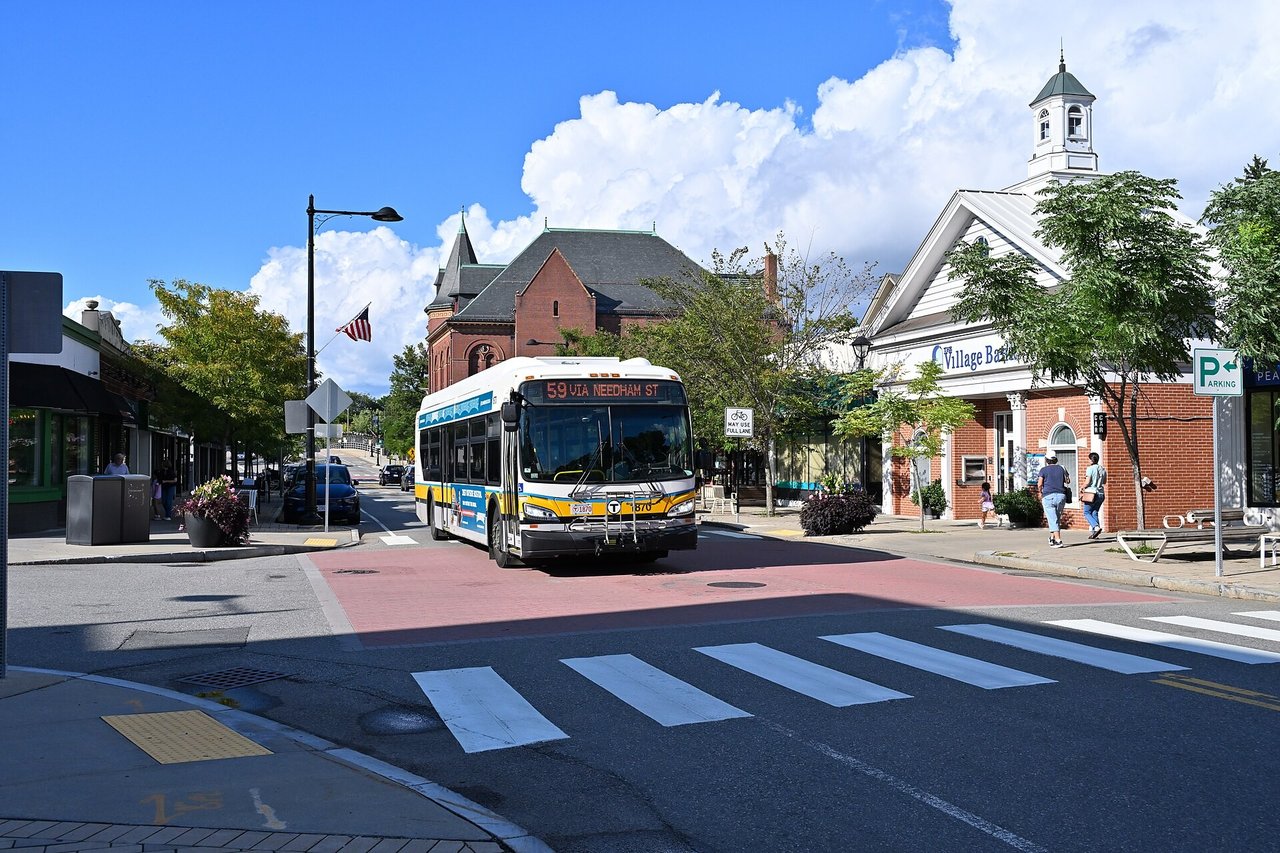
Newtonville has one of Newton's more active village centers, particularly around Walnut Street, with residential streets extending in several directions. Shops, restaurants, community destinations, and a commuter rail station give it an everyday rhythm. Its housing ranges across periods and styles, and its blocks can feel quite different depending on their relationship to Walnut Street, Washington Street, and the railroad. Exploring those differences is the key to finding the right location.
Newtonville expanded as a suburban village in the nineteenth century. Historic Newton notes that the decision to build the city's central high school here in 1859 attracted new residents. The railroad station, known as Hull's Crossing, followed in 1880 and supported travel to Boston. Walnut Street developed into an important north-south route during the streetcar era, while its commercial buildings grew over time.
The history helps explain Newtonville's mixture of established residential streets and an active center. Older homes on quieter blocks sit within reach of businesses and transportation. The village continues to change, but its street pattern and many historic buildings make the layers of development easy to see on a walk.
For many people, Newtonville's appeal begins with the ability to combine errands, meals, and neighborhood activity. The center gives residents places to visit without planning a trip across town. Yet walkability depends on the property. From one home, the route to Walnut Street may be quick and pleasant; from another, a busy crossing or longer distance may make driving more likely.
Walk the route yourself. Notice sidewalk conditions, traffic, parking, and what the center feels like in the evening as well as during the day. If you are especially sensitive to noise, pay attention to the relationship between the home and the more active streets. Living close to village businesses can be a genuine convenience, but each buyer will have a different preference for how close is comfortable.
Newtonville's residential inventory includes nineteenth-century houses, later homes, condominiums, and properties that have been expanded or updated. Even within one architectural period, floor plans differ. Compare usable rooms, storage, natural light, and how renovations connect with the older parts of a house. Cosmetic finishes are easy to notice; construction quality and major systems require more deliberate review.
Part of Newtonville is within a local historic district. The designation applies to specific properties, not every Newtonville address. If you plan exterior work, verify the district boundary and applicable review process. A buyer contemplating an addition should also evaluate lot size, setbacks, and the existing structure with qualified professionals before assuming a project will be possible.
Residential streets may offer different amounts of yard space and separation from neighboring buildings. Step outside during a showing and take in the setting. Would the outdoor area work for the way you want to use it? How is parking arranged? Does the room you would use as an office face a busy road? Those questions can matter more after move-in than a striking listing photograph.
Newtonville commuter rail near Walnut Street. Photo: 4300streetcar | CC BY 4.0 | source and license in PHOTO_CREDITS.txt
Newtonville has a commuter rail stop on the Framingham/Worcester Line. Service schedules and station details can change, so check the current trip to your actual destination. The village is also connected by roads and local bus routes. A central location may simplify some journeys while making other streets busier. Test the travel time that matters to you rather than relying on a generic commute claim.
Outdoor options include Cabot Park and the broader network of Newton public spaces. A nearby park can be a useful part of daily life, but proximity varies across the village. Walk or drive from a prospective home to the places you would use. If recreation is a priority, compare the convenience of those routes with other Newton villages rather than assuming all parks are equally accessible.
George Howell Coffee on Walnut Street is a recognizable café stop; MIDA and Fuji at Newton provide dinner choices nearby. These businesses help make the center active beyond commuting hours.
Buyers can start by deciding whether they want to be near Walnut Street and the station or prefer a more residential setting. Then compare houses based on condition, layout, lot, and the amount of work involved. Visit at different times if rail or road noise may affect your decision. A good Newtonville purchase matches both the village routine and the specific home.
For sellers, clear marketing helps buyers appreciate where a property sits within the village. Show its connection to shops or transit accurately, explain improvements, and include a useful floor plan. Pricing should account for the home's street and condition; Newtonville properties are not interchangeable merely because they share a village name.
Explore current Newtonville homes below. Contact us if you want to discuss a listing or plan your search, or request a home valuation if you are considering selling your Newtonville property.
10,695 people live in Newtonville, where the median age is 45 and the average individual income is $112,799. Data provided by the U.S. Census Bureau.
Total Population
Median Age
Population Density Population Density This is the number of people per square mile in a neighborhood.
Average individual Income
Newtonville has 3,731 households, with an average household size of 3. Data provided by the U.S. Census Bureau. Here’s what the people living in Newtonville do for work — and how long it takes them to get there. Data provided by the U.S. Census Bureau. 10,695 people call Newtonville home. The population density is 7,087 and the largest age group is Data provided by the U.S. Census Bureau.
Total Population
Population Density Population Density This is the number of people per square mile in a neighborhood.
Median Age
Men vs Women
Population by Age Group
0-9 Years
10-17 Years
18-24 Years
25-64 Years
65-74 Years
75+ Years
Education Level
Total Households
Average Household Size
Average individual Income
Households with Children
With Children:
Without Children:
Marital Status
Blue vs White Collar Workers
Blue Collar:
White Collar:
Our team will elevate your real estate experience, ensuring sellers shine and buyers win in Greater Boston's competitive market. Our dedication goes beyond deals—we're about making dreams a reality, building lasting bonds, and turning complex market challenges into rewarding outcomes for every client.


