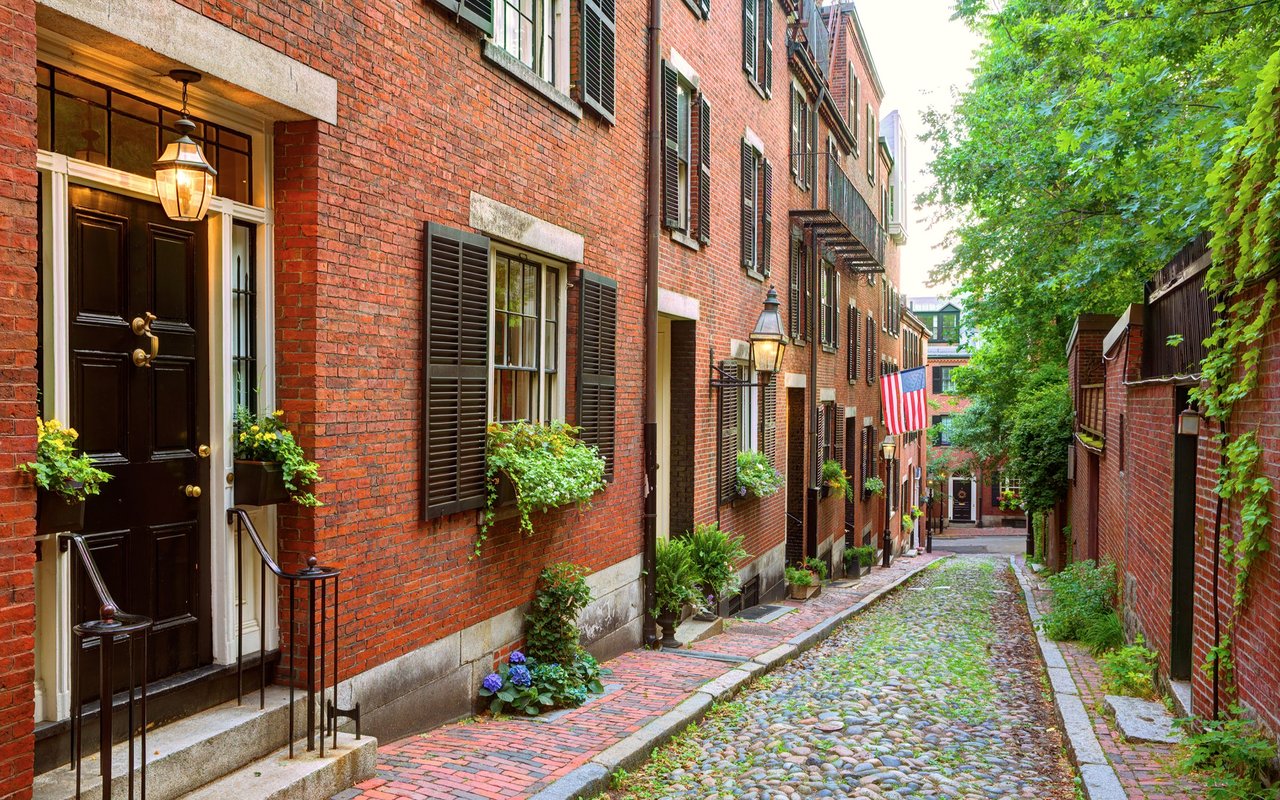
Newton Upper Falls is one of the city's oldest villages, with a history that still shapes its streets. The Charles River and its waterpower attracted early settlement and manufacturing. Today, older buildings, residential blocks, local businesses, and river access give Upper Falls a character that feels different from Newton's larger shopping centers. A visit works best when you allow time to walk: the details are easier to appreciate between the main roads than from a passing car.
Historic Newton describes Upper Falls as one of the city's original villages and the only one to retain a name used before Newton separated from Cambridge in 1688. John and Rebecca Woodward settled here in 1681. Waterpower supported manufacturing in the eighteenth and nineteenth centuries, and rail service later aided the village's growth. Upper Falls once included a much wider area, before Newton Highlands and Waban became separate villages.
That industrial past has not disappeared completely. Older structures and the pattern of streets offer a sense of the village that grew around work along the river. Rather than presenting Upper Falls as a preserved museum, it is more accurate to see it as a neighborhood still evolving around its historic core. New businesses, renovations, and changing uses coexist with buildings that have stood for generations.
The river is central to understanding Upper Falls. Paths and open spaces reveal the landscape that once supplied power to mills. Echo Bridge is a notable landmark in this part of Newton, and a walk in the area can reveal a view of the river as well as a piece of local engineering history. The Upper Falls Riverwalk follows the corridor.
If outdoor access matters in a home search, test the route from the specific property. A listing described as close to a trail may still involve a busy crossing or a longer walk than you expect. For a home near the water, review site conditions and available flood information rather than drawing conclusions from the village name alone. The property's relationship to the river is a benefit to understand carefully, not an assumption to make from a map.
Upper Falls contains older houses, smaller homes, and properties that have been altered over time. The village's architectural interest makes condition particularly important. A period exterior may hide a fully modernized interior, a partially finished project, or systems that need substantial work. Ask about permits, the dates of improvements, and the practical cost of any changes you hope to make.
Part of Newton Upper Falls is a local historic district. Its boundaries do not cover every property in the village. If exterior renovation or an addition is central to your plans, confirm whether the address is within the district and what review may apply before committing to a design. Zoning, lot dimensions, and existing conditions also affect what is possible, regardless of historic status.
Lot layout can matter as much as the house. Look at parking, grade, outdoor privacy, and how adjacent buildings relate to the yard. Some buyers will welcome the close-knit feel of an older village street. Others need more separation or a larger outdoor area. Touring different blocks helps clarify which setting fits your expectations.
Upper Falls has neighborhood-scale businesses, while additional shopping and services are available in other parts of Newton and nearby communities. Plan a typical week from an actual address: where would you buy groceries, meet someone for dinner, or spend time outdoors? Drive the routes you would use and consider which trips are comfortable on foot.
Regional road access can be useful, but it may also affect traffic near particular properties. An address on a quieter side street deserves a different evaluation from one closer to a major corridor. Visit during commuter hours if the location is a concern. Public transit options depend on where within the village you live and where you need to go; check the current route rather than assuming that all Newton villages offer the same rail access.
Bettina's Bakery brings a café stop to the historic village, while Little Luke's Café and Frozen Falls Ice Cream offer another casual destination on Chestnut Street.
Buyers should compare the character of an Upper Falls home with its everyday practicality. Review the structure, site, and commute alongside the historic exterior or river setting. Decide whether you want a move-in-ready property, a manageable renovation, or a longer project, and assess each listing against that goal.
Sellers should make the home's story easy to understand without overstating it. Show accurate interior and exterior photographs, explain improvements, and identify nearby amenities precisely. Price should reflect condition and location. Buyers attracted to the village's history still need clear answers about how the house functions today.
Explore Newton Upper Falls listings below. If you are considering a home here, contact us to discuss a particular street or property. If you own in Upper Falls and are planning a sale, request a home valuation to begin a property-specific conversation.
8,380 people live in Newton Upper Falls, where the median age is 44 and the average individual income is $91,083. Data provided by the U.S. Census Bureau.
Total Population
Median Age
Population Density Population Density This is the number of people per square mile in a neighborhood.
Average individual Income
Newton Upper Falls has 3,088 households, with an average household size of 3. Data provided by the U.S. Census Bureau. Here’s what the people living in Newton Upper Falls do for work — and how long it takes them to get there. Data provided by the U.S. Census Bureau. 8,380 people call Newton Upper Falls home. The population density is 10,817 and the largest age group is Data provided by the U.S. Census Bureau.
Total Population
Population Density Population Density This is the number of people per square mile in a neighborhood.
Median Age
Men vs Women
Population by Age Group
0-9 Years
10-17 Years
18-24 Years
25-64 Years
65-74 Years
75+ Years
Education Level
Total Households
Average Household Size
Average individual Income
Households with Children
With Children:
Without Children:
Marital Status
Blue vs White Collar Workers
Blue Collar:
White Collar:
Our team will elevate your real estate experience, ensuring sellers shine and buyers win in Greater Boston's competitive market. Our dedication goes beyond deals—we're about making dreams a reality, building lasting bonds, and turning complex market challenges into rewarding outcomes for every client.


