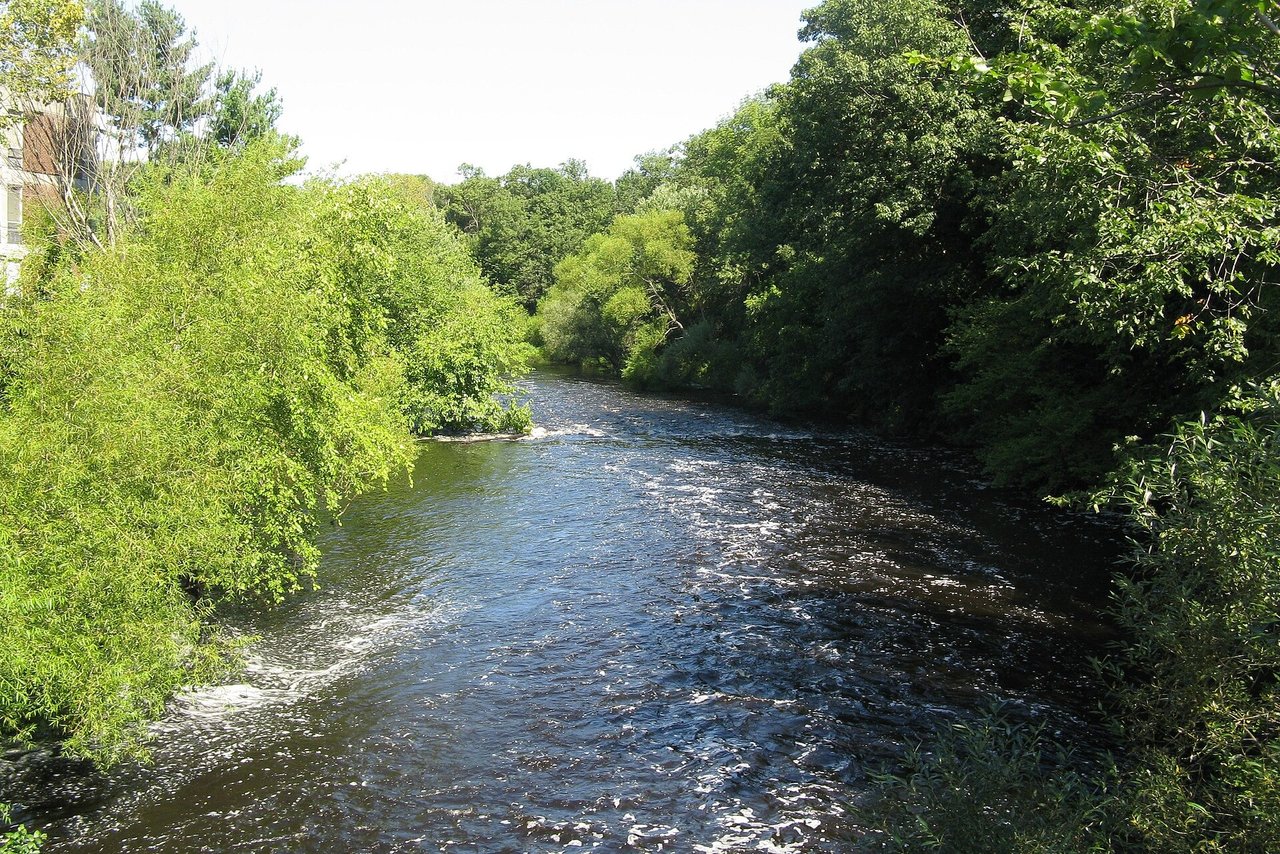
Newton Lower Falls is a small village with a river-centered history and a setting unlike Newton's larger commercial hubs. The Charles River, the former mill landscape, and the connection across the water toward Wellesley all shape the area. Buyers drawn to Lower Falls often appreciate its scale, but should evaluate the exact street and route to everyday destinations. This is a village best understood on foot and at the property level.
The falls made this a useful site for industry long before it became primarily residential. Historic Newton records a dam built in 1704 to power an ironworks. Paper manufacturing later became the village's leading industry, with multiple mills operating along the river in the early nineteenth century. Homes, shops, and other services grew around that work. The village was a place of production, not simply a scenic riverside neighborhood.
Industry declined, and twentieth-century road construction and redevelopment removed much of the old built environment. What remains offers clues to the earlier village but cannot tell the whole story by itself. Understanding that change gives today's Lower Falls more depth: the river is both a natural feature and the reason this particular settlement developed where it did.
The Charles continues to anchor Lower Falls visually. A walk near the river or across the pedestrian bridge can help you understand how Newton and Wellesley meet here. The village is comparatively small, and much of its appeal lies in that intimate scale. Hamilton Playground and the Lower Falls Community Center add a local recreation option. It does not offer the same concentration of storefronts as Newton Centre or West Newton; buyers should decide whether that quieter pattern suits their routine.
Road access may be convenient for regional travel, but a house's exposure to traffic can vary. A property close to a major route deserves a visit at more than one hour. Check the sound in the yard and in rooms where you would spend most of your time. Also examine the route to shops or paths rather than relying on a straight-line map distance. A short trip can feel very different depending on crossings and sidewalks.
Lower Falls includes homes from different periods, some on streets connected to its former industrial center. That history makes careful property review especially useful. Look at the condition of the structure and systems, the relationship of the home to the road, and how the lot handles slope and water. A riverside setting is appealing, but any property near water calls for a site-specific review of drainage, flood information, and insurance considerations.
Buyers considering an older home should ask which upgrades were completed and when. Photographs may show a refreshed interior while leaving unanswered questions about roofing, heating, windows, or foundations. A thoughtful inspection and review of available records help distinguish an attractive project from a home that exceeds the work you want to take on.
Lower Falls sits at Newton's western edge, and nearby Wellesley destinations may be part of a resident's everyday life. The municipal boundary still matters. A Newton address is governed by Newton's services and rules, and property-specific details should be verified accordingly. Do not assume that a nearby business or a familiar “Lower Falls” label establishes which town a home belongs to.
This location can suit someone who values a smaller residential environment while remaining connected to other village centers and regional routes. It may be less suitable for someone who wants many errands within a few minutes' walk. The best way to decide is to trace your likely weekly routine from an actual listing and see how the travel feels.
Lower Falls Wine Company is a distinctive stop in a former community hall, while dining options extend across the Charles into Wellesley Lower Falls. That is a practical advantage for some routines, but the town line matters for property services. Choose a café or restaurant you would actually visit and test the route from the listing.
Lower Falls Wine Company occupies a former community hall, a small example of the village’s ability to reuse historic buildings. It is a useful stop when touring Washington Street. Cross the river as well, then return to the Newton side to judge how the two areas connect.
When buying, compare Lower Falls properties with similar homes in Newton and nearby areas, but account for village scale, road position, condition, and river setting. A broad citywide price measure will not explain those differences. Prioritize the home's usable layout and the level of work required. If the setting is a major attraction, visit during different weather and traffic conditions when practical.
When selling, tell the property's story accurately. Show the home, the lot, and its relationship to the river or village without implying an amenity is on the property when it is only nearby. Clear floor plans, good photography, and documentation of improvements can answer buyers' most important questions. A well-supported price should reflect both the special setting and the home's actual condition.
Explore current Newton Lower Falls listings below. Contact us about a home or request a home valuation if you are considering selling.
1,483 people live in Newton Lower Falls, where the median age is 47 and the average individual income is $110,304. Data provided by the U.S. Census Bureau.
Total Population
Median Age
Population Density Population Density This is the number of people per square mile in a neighborhood.
Average individual Income
Newton Lower Falls has 574 households, with an average household size of 2. Data provided by the U.S. Census Bureau. Here’s what the people living in Newton Lower Falls do for work — and how long it takes them to get there. Data provided by the U.S. Census Bureau. 1,483 people call Newton Lower Falls home. The population density is 6,167 and the largest age group is Data provided by the U.S. Census Bureau.
Total Population
Population Density Population Density This is the number of people per square mile in a neighborhood.
Median Age
Men vs Women
Population by Age Group
0-9 Years
10-17 Years
18-24 Years
25-64 Years
65-74 Years
75+ Years
Education Level
Total Households
Average Household Size
Average individual Income
Households with Children
With Children:
Without Children:
Marital Status
Blue vs White Collar Workers
Blue Collar:
White Collar:
Our team will elevate your real estate experience, ensuring sellers shine and buyers win in Greater Boston's competitive market. Our dedication goes beyond deals—we're about making dreams a reality, building lasting bonds, and turning complex market challenges into rewarding outcomes for every client.


