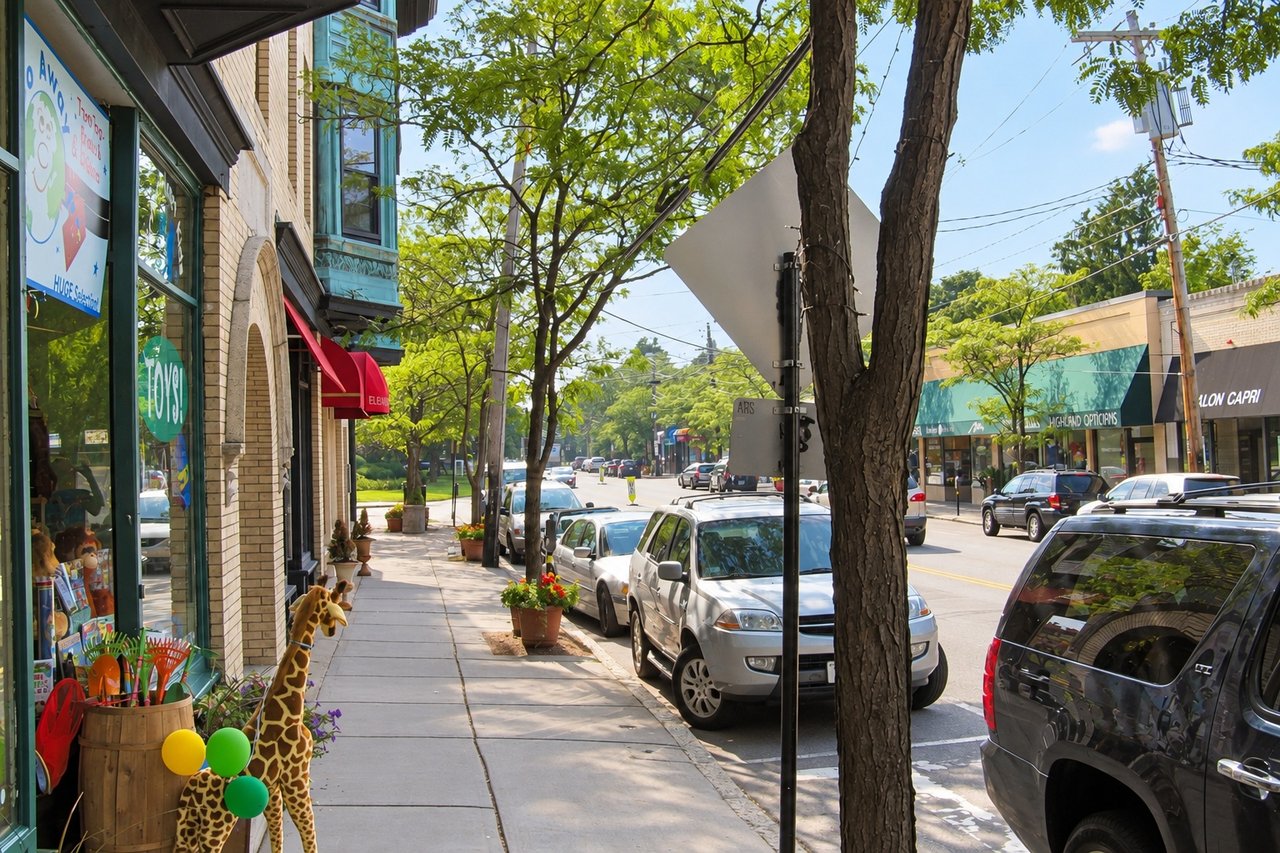
Newton Highlands offers a village center that feels distinctly its own. Lincoln Street brings shops, places to eat, and a community gathering point together within a relatively compact area. Residential streets radiate outward, and the Green Line offers a transportation option for some commuters. Buyers who value a walkable routine often begin here, but the village also includes homes at varying distances from its center. Exploring the streets is the best way to understand the difference.
Historic Newton traces the Highlands from a long agricultural period into nineteenth-century suburban growth. As late as 1870, fewer than twenty families lived in the area. Railroad service initially did little to change that because trains were infrequent and much of the line served industrial needs. Growth accelerated in the 1870s, and residents adopted the name Newton Highlands in 1874.
That history explains some of the architectural variety surrounding today's center. Streets laid out during the village's growth contain houses from different decades, and later alterations reflect the needs of successive owners. The former Hyde School complex and Hyde Community Center add another layer to the village's civic story. Newton Highlands is not merely a strip of shops; it developed through transportation, local institutions, and residential investment over time.
The Lincoln Street area gives the Highlands much of its recognizable character. A buyer might imagine walking out for coffee, meeting a friend, or handling a small errand without getting in a car. Whether that becomes a regular habit depends on the exact home. Walk from a prospective property to the center and back. A route can be pleasant on one side of a main road and less comfortable from another.
A lively village center brings activity as well as convenience. Nearer locations may have more passing traffic or tighter parking, while streets farther away can feel calmer. Decide which balance fits you. A home need not be directly beside Lincoln Street to benefit from the village, and a house close to the center should still be evaluated for privacy and noise.
Newton Highlands has older houses with character, updated properties, and homes that offer room for future work. Floor plans can differ substantially even when exterior styles look similar. Examine how the kitchen relates to living spaces, where bedrooms are placed, and whether storage and work areas meet your needs. For a property with an addition, look at how naturally the new space connects to the original house.
Outdoor space deserves the same attention. Lot shape, grade, neighboring buildings, and mature trees influence how usable a yard feels. If a home has appealing landscaping, consider both the enjoyment and the upkeep. If you hope to expand, do not assume that a large-looking lot permits the project you imagine. Review applicable zoning and permitting with qualified professionals before relying on a future plan.
Newton Highlands has a stop on the Green Line D branch. Transit can be a useful option for trips toward Boston, subject to the current service pattern and the walk from a particular house. Road connections also make other Newton villages and nearby destinations accessible. As with any commute, test the real trip. A convenient address for one workplace may require an awkward transfer for another.
The village's appeal also extends beyond commuting. Community activity and a small-scale commercial core create opportunities to see neighbors during ordinary errands. Nearby parks and other Newton outdoor spaces broaden the options. The right home makes these resources fit naturally into your life, rather than simply placing them on a list of attractions.
Buttonwood on Lincoln Street is a dinner destination, and Shiva's Kitchen on Walnut Street adds another dining option in the village. A coffee stop or restaurant may be nearby on a map but still require a crossing that changes how often you would walk there.
The Hyde Community Center adds a neighborhood gathering place to the village. Its role differs from a restaurant or a transit stop: it reflects the local habit of using Lincoln Street for more than errands. Check its current events if community activities are part of your search.
Buyers should be precise about what “walkable” means to them. Is the priority the train, restaurants, errands, or simply a pleasant neighborhood stroll? Rank those goals and compare routes from each home. Then assess house condition, price, and street setting separately. A charming exterior can distract from expensive work; an unassuming house can offer the layout and location that serve you better.
Sellers can help buyers picture daily life with accurate, specific information. Show how spaces function, document meaningful updates, and use local photographs that genuinely represent the property's surroundings. The listing price should reflect the home's condition and position within the village. Homes a few blocks apart may have different strengths and face different competition.
Explore current Newton Highlands listings below. Contact us about a home or request a home valuation if you are considering selling.
8,623 people live in Newton Highlands, where the median age is 49 and the average individual income is $119,511. Data provided by the U.S. Census Bureau.
Total Population
Median Age
Population Density Population Density This is the number of people per square mile in a neighborhood.
Average individual Income
Newton Highlands has 3,229 households, with an average household size of 3. Data provided by the U.S. Census Bureau. Here’s what the people living in Newton Highlands do for work — and how long it takes them to get there. Data provided by the U.S. Census Bureau. 8,623 people call Newton Highlands home. The population density is 7,906 and the largest age group is Data provided by the U.S. Census Bureau.
Total Population
Population Density Population Density This is the number of people per square mile in a neighborhood.
Median Age
Men vs Women
Population by Age Group
0-9 Years
10-17 Years
18-24 Years
25-64 Years
65-74 Years
75+ Years
Education Level
Total Households
Average Household Size
Average individual Income
Households with Children
With Children:
Without Children:
Marital Status
Blue vs White Collar Workers
Blue Collar:
White Collar:
Our team will elevate your real estate experience, ensuring sellers shine and buyers win in Greater Boston's competitive market. Our dedication goes beyond deals—we're about making dreams a reality, building lasting bonds, and turning complex market challenges into rewarding outcomes for every client.


